Home » SpaceX ignites all 33 powerful engines on Starship booster test ahead of Flight 13 launch

SpaceX ignites all 33 powerful engines on Starship booster test ahead of Flight 13 launch

0 10

It looks like SpaceX’s next Starship flight is on the horizon, as soon as next week.

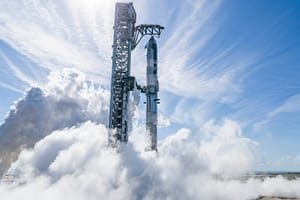
SpaceX today (July 10) completed a brief static fire of the Starship Super Heavy booster tapped to launch the 13th test flight of the massive, mega-lift vehicle.

Booster 20 — the latest Super Heavy to roll off the assembly line — was transported to the pad at SpaceX’s Starbase, Texas, facility yesterday (July 9) and hoisted onto its support stand using the launch tower’s stalwart “Mechazilla” chopstick arms. By early Friday, SpaceX began preparations leading up to the prelaunch engine test, including closing Boca Chica beach around 8 a.m. EDT (1200 GMT) and transferring fuel to the pad’s tank farm ahead of loading propellant onto the vehicle.

This is the second “Version 3” (V3) booster to reach the pad at Starbase for testing, and is equipped with 33 of SpaceX’s upgraded Raptor 3 engines. Those engines ignited in a blazing heat on Friday just before 11 a.m. EDT (1500 GMT), and underwent a roughly 25-second burn simulating on the launch stand the duration and flight conditions for an actual launch.

The successful completion of Booster 20’s static test fire paves the way for Starship’s upcoming test launch, Flight 13. That could launch as early as Wednesday (July 15), according to a notice from the Federal Aviation Administration.

Compared to Version 2 (V2), Starship V3 packs a much stronger punch. The rocket was upgraded with enhanced avionics to reduce mass and increase launch capacity, a taller fuel tank with a larger volume, and equipment for transferring propellant between spacecraft, which will be needed to fulfill many of the missions Starship is being designed to carry out.

A handful of those missions will be for NASA’s Artemis program, and the agency’s plans to return to the moon. Starship is one of two lunar landers currently contracted to deliver astronauts to the lunar surface, so, its success and timely demonstration of the technologies needed to do so are coming under a microscope as the timeline for those missions shrinks.

Flight 13 will follow the same basic timeline as Flight 12, which lifted off in May with mixed success. Flight 12 was the first launch of Starship V3, and prompted SpaceX to fly a slightly more conservative mission than many previous tests, which have built on previous successes with increasingly expanding goals. Starship’s last flight sent the vehicle’s upper stage, Ship, on a suborbital trajectory with a soft splashdown in the Indian Ocean. SpaceX ran into some issues, though, when the rocket’s Super Heavy booster (Booster 19) failed to maneuver itself for a soft ocean splashdown of its own. Ship (Ship 39) also ran into an engine anomaly that caused SpaceX to forgo the stage’s in-space engine relight demonstration.

Flight 13 will be comprised of Ship 40 and booster 20, and will seek to qualify same set of mission objectives from first V3 launch. Some of those objectives include the retrieval of both stages back at their Starbase launch pad, for refurbishment and reuse on future flights.

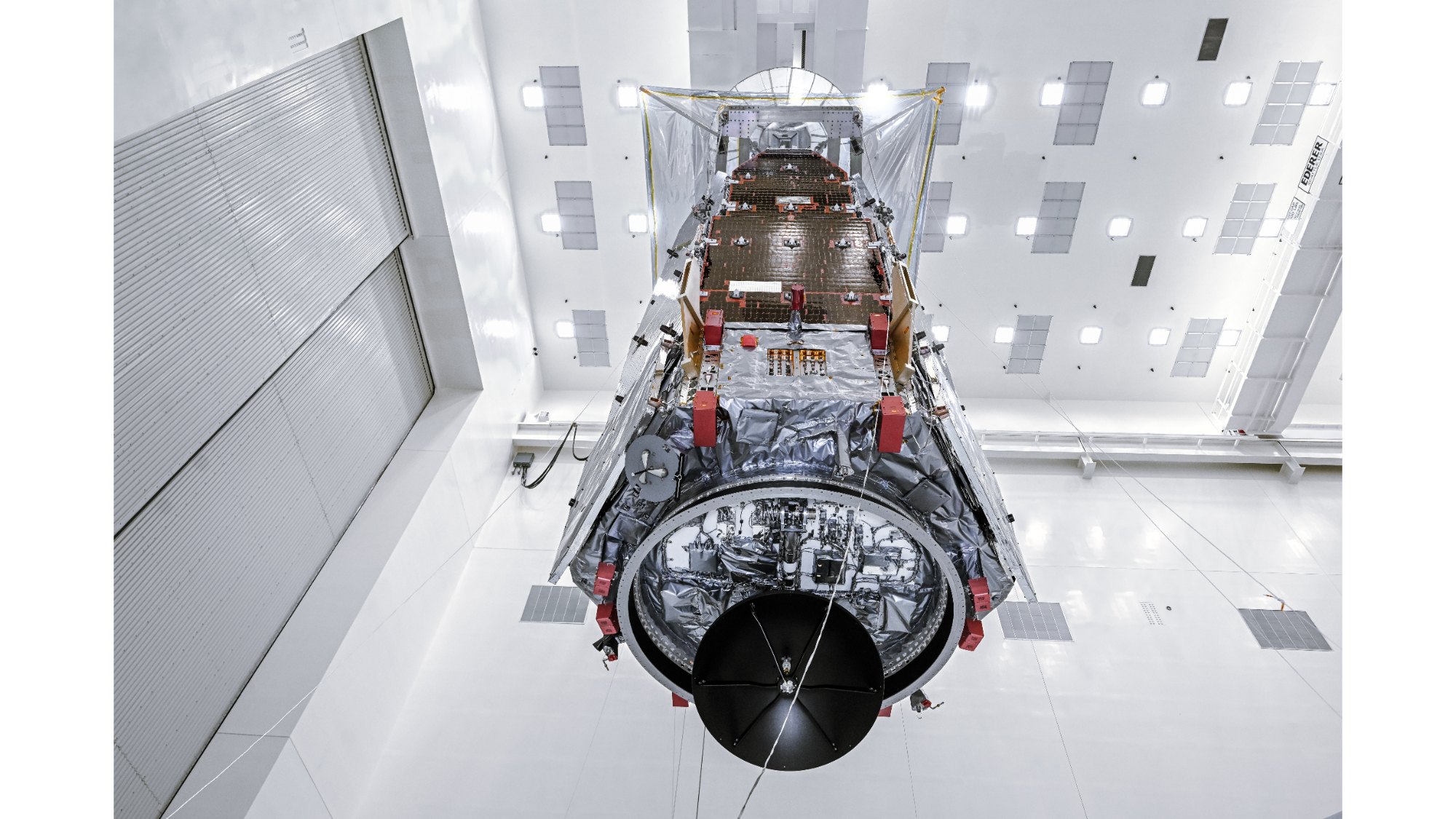
SpaceX conducts a static fire test with Ship 40, the upper-stage spacecraft slated to fly Starship's 13th test flight. The company posted this imagery on X on July 2, 2026.

SpaceX conducts a static fire test on July 2, 2026, with Ship 40, the upper-stage spacecraft slated to fly Starship’s 13th test flight. (Image credit: SpaceX)

That’s because landing Starship is much different than landing Super Heavy. SpaceX has a lot of practice landing and reflying rocket boosters. The company’s workhorse Falcon 9 rocket launches several times a month, and is routinely recovered, refurbished and reflown within a short few weeks. A batch of Starlink satellites recently launched on one of SpaceX’s most-flown Falcon 9 boosters, which broke a reflight record as it touched down for the 36th time after delivering its payloads to orbit. Though it lacks the landing legs of Falcon 9, Super Heavy’s descent back to Earth is very similar to a Falcon 9 booster, and therefore less complex an engineering question to have to solve compared to Starship’s upper stage.

Flight 13 will give SpaceX a chance to demonstrate repeat the descent profile using Ship 40, while also working through the booster and engine issues encountered during Flight 12. If all goes according to plan, the launch will bring Starship V3 closer to more ambitious tests, including orbital insertion, propellant transfer and the recovery of both stages back at Starbase.

SpaceX’s long-term objective is to recover, refurbish and rapidly reuse the entire launch system—transforming Starship from an experimental vehicle into a fully operational transportation platform for Earth orbit, the Moon and Mars.

About The Author

Leave a Reply

Your email address will not be published. Required fields are marked *