Mission snapshot: Dragonfly is a NASA rotorcraft designed to explore Titan, Saturn’s largest moon. NASA currently targets launch no earlier than July 2028 and arrival in late 2034. These are planning dates, not a launch booking.
Why fly on Titan?
Titan has a thick nitrogen atmosphere, organic chemistry, dunes, and lakes and seas of liquid methane and ethane. Its surface is far too cold for liquid water to remain exposed, yet it offers a natural laboratory for studying chemical steps that may precede life. Dragonfly will travel between sites instead of making all its measurements from one landing spot.
That mobility is the mission’s central advantage. A stationary lander can study one patch of terrain in depth; an orbiter can map broad patterns from above. Dragonfly can compare material from different settings on the ground and connect local chemistry to Titan’s wider landscape. Titan’s dense air and relatively weak gravity make rotorcraft flight practical, although the spacecraft still has to survive an exceptionally cold and distant environment.
What will it measure?
The car-sized, eight-rotor vehicle will sample surface material to investigate its composition and study Titan’s geology and atmosphere. The scientific question is about habitability and prebiotic chemistry: what complex organic processes can occur on a world unlike Earth? Finding organic compounds would not by itself mean finding life. The mission is built to examine the chemical environment and how it changes from place to place.
How the mission works
Dragonfly uses a radioisotope power system rather than relying on sunlight so far from the Sun. Its planned journey to Titan takes roughly six years. After arrival, the team will use flights to reach multiple science sites, gathering data on the ground between hops. This is a different sort of planetary exploration from NASA’s Ingenuity helicopter on Mars: Dragonfly is a dedicated science spacecraft, with mobility built into the mission from the start.
What to watch next
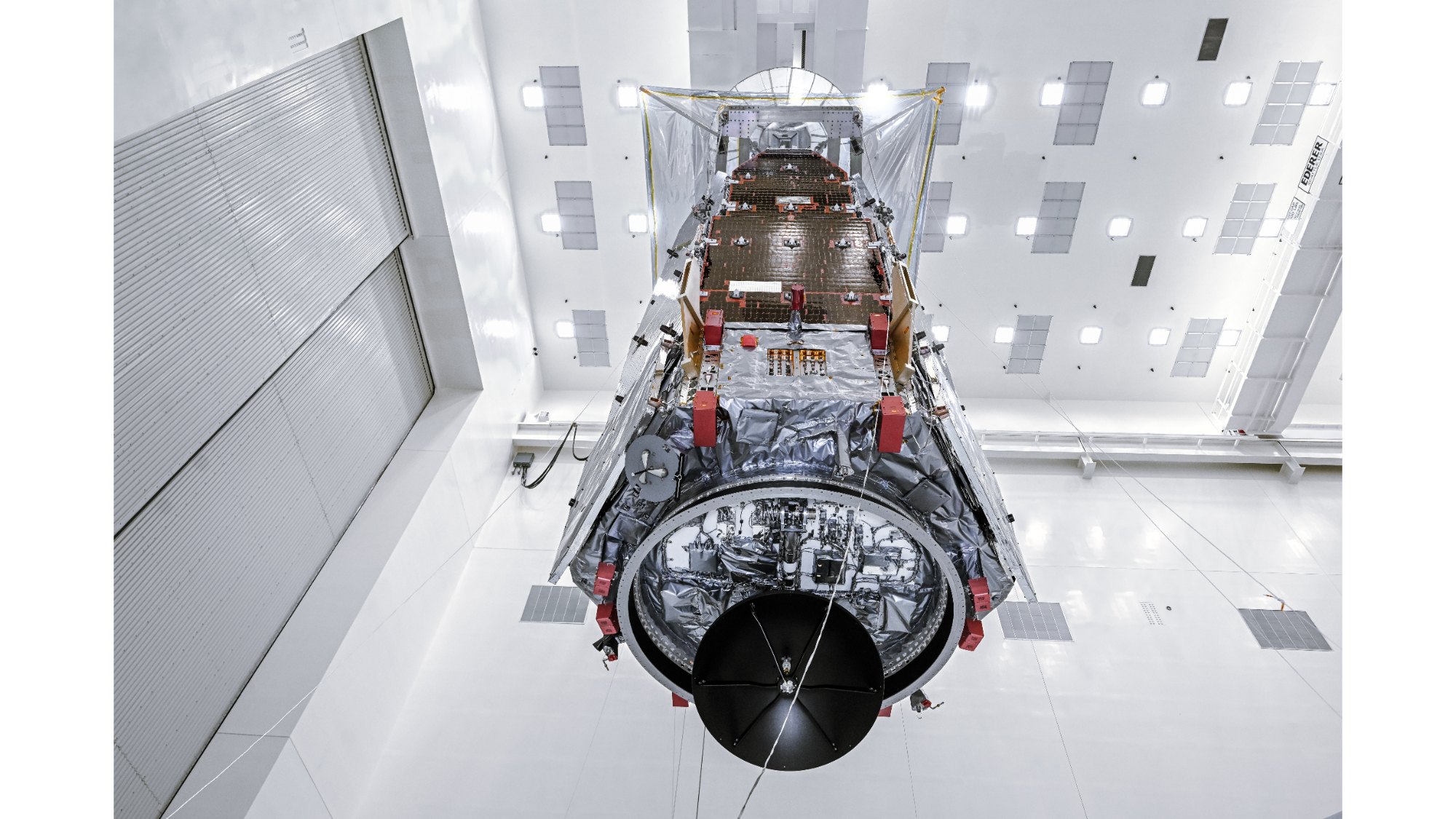
The meaningful milestones before launch are integration and testing of the flight system, the launch readiness schedule, and NASA’s updates to the arrival and science plan. We will update this guide when NASA changes a target date or reports a major test result.
Primary sources: NASA Dragonfly mission overview · NASA integration and testing update. Explore the destination in our Saturn guide and find more spacecraft in the Missions directory.