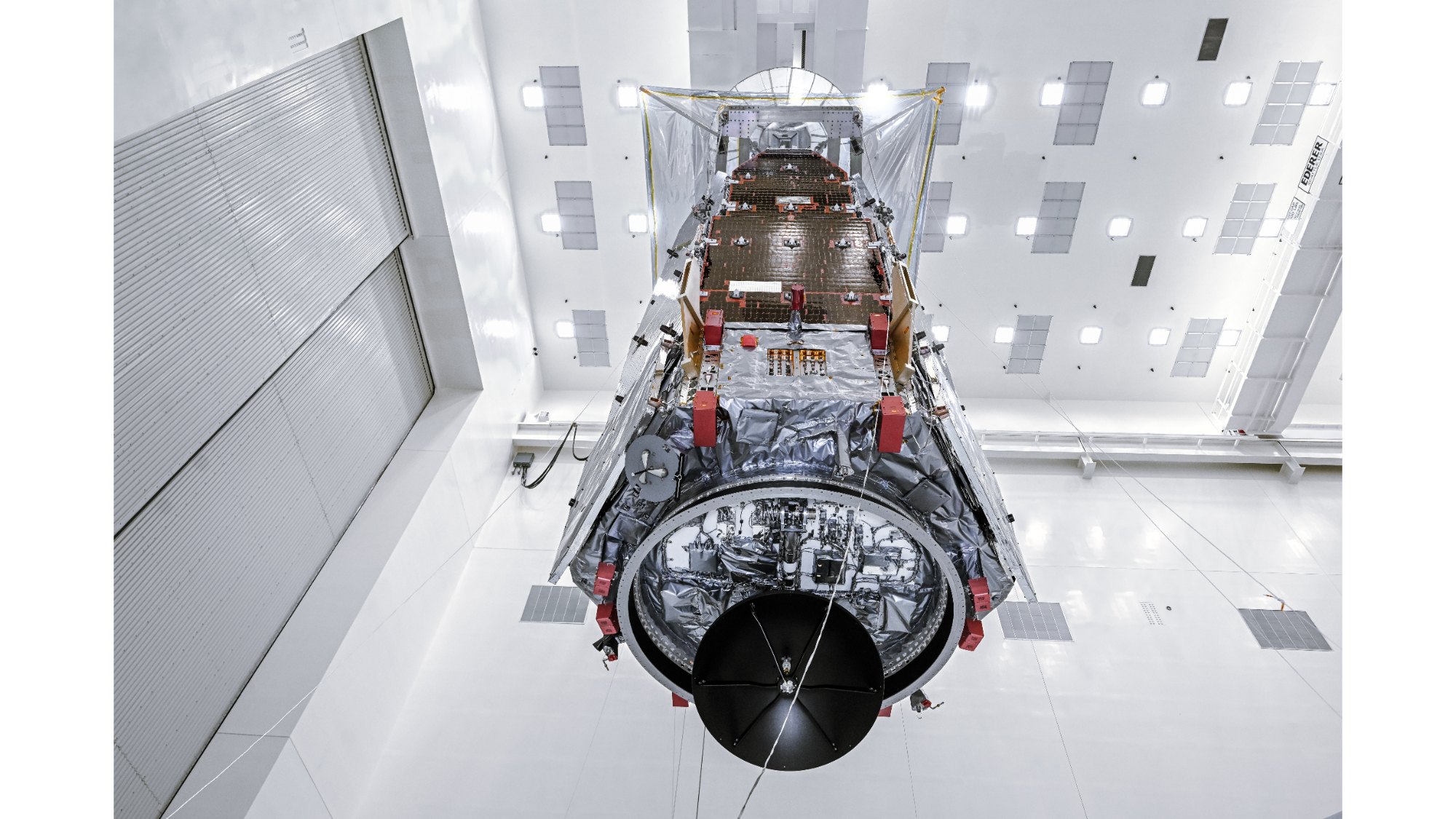
The Hubble Space Telescope is a space telescope that was launched into low Earth orbit in 1990 and remains in operation. It was named after astronomer Edwin Hubble. The Hubble Space Telescope is one of NASA’s Great Observatories, along with the Chandra X-ray Observatory and the Spitzer Space Telescope.
The telescope has a 2.4-meter mirror and is 13.3 meters long. It is capable of observing in visible, ultraviolet, and infrared light. The telescope is best known for its stunning images of galaxies, nebulae, and other objects in the universe, which have helped to revolutionize our understanding of the cosmos.
One of the most significant contributions of the Hubble Space Telescope has been its ability to provide precise measurements of the expansion rate of the universe, known as the Hubble constant. These measurements have helped to confirm the existence of dark energy, a mysterious force that is causing the expansion of the universe to accelerate.
The telescope has also been used to study the atmospheres of planets in our own solar system and to search for evidence of planets around other stars. In addition, the Hubble Space Telescope has been used to study the life cycles of stars and to provide new insights into the formation and evolution of galaxies.
The telescope has made many important scientific discoveries, and its images have captivated the public and inspired a new generation of astronomers. Despite some initial technical difficulties, the Hubble Space Telescope has become one of the most productive and successful scientific instruments in history.