Artemis II: Inside NASA’s First Crewed Mission Back to Lunar Space
More than fifty years after Apollo astronauts last orbited the Moon, NASA is preparing to send humans back into deep space. The Artemis II mission will carry four astronauts aboard the Orion spacecraft on a roughly ten-day journey around the Moon, marking the first crewed lunar mission since 1972 and a critical step toward returning astronauts to the lunar surface.
While the uncrewed Artemis I mission proved that NASA’s Space Launch System (SLS) rocket and Orion spacecraft could travel to the Moon and back, Artemis II will be the first time those systems are tested with astronauts aboard. The mission will evaluate Orion’s life-support systems, communications, navigation, and operational procedures in deep space—capabilities that must work flawlessly before NASA attempts a lunar landing later in the decade.
The Artemis II Crew
NASA announced the Artemis II crew in 2023, assembling a team that reflects the international nature of the Artemis program.
Crew members
- Reid Wiseman – Commander (NASA)
- Victor Glover – Pilot (NASA)
- Christina Koch – Mission Specialist (NASA)
- Jeremy Hansen – Mission Specialist (Canadian Space Agency)
The mission represents several historic milestones. Glover will become the first Black astronaut to travel to lunar space, Koch the first woman to do so, and Hansen the first Canadian astronaut to leave Earth orbit.
The crew will operate the Orion spacecraft and conduct system evaluations throughout the mission.
Launch: The Most Powerful Rocket in NASA’s History
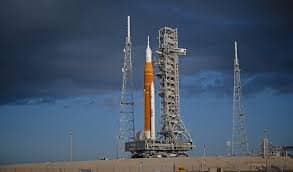
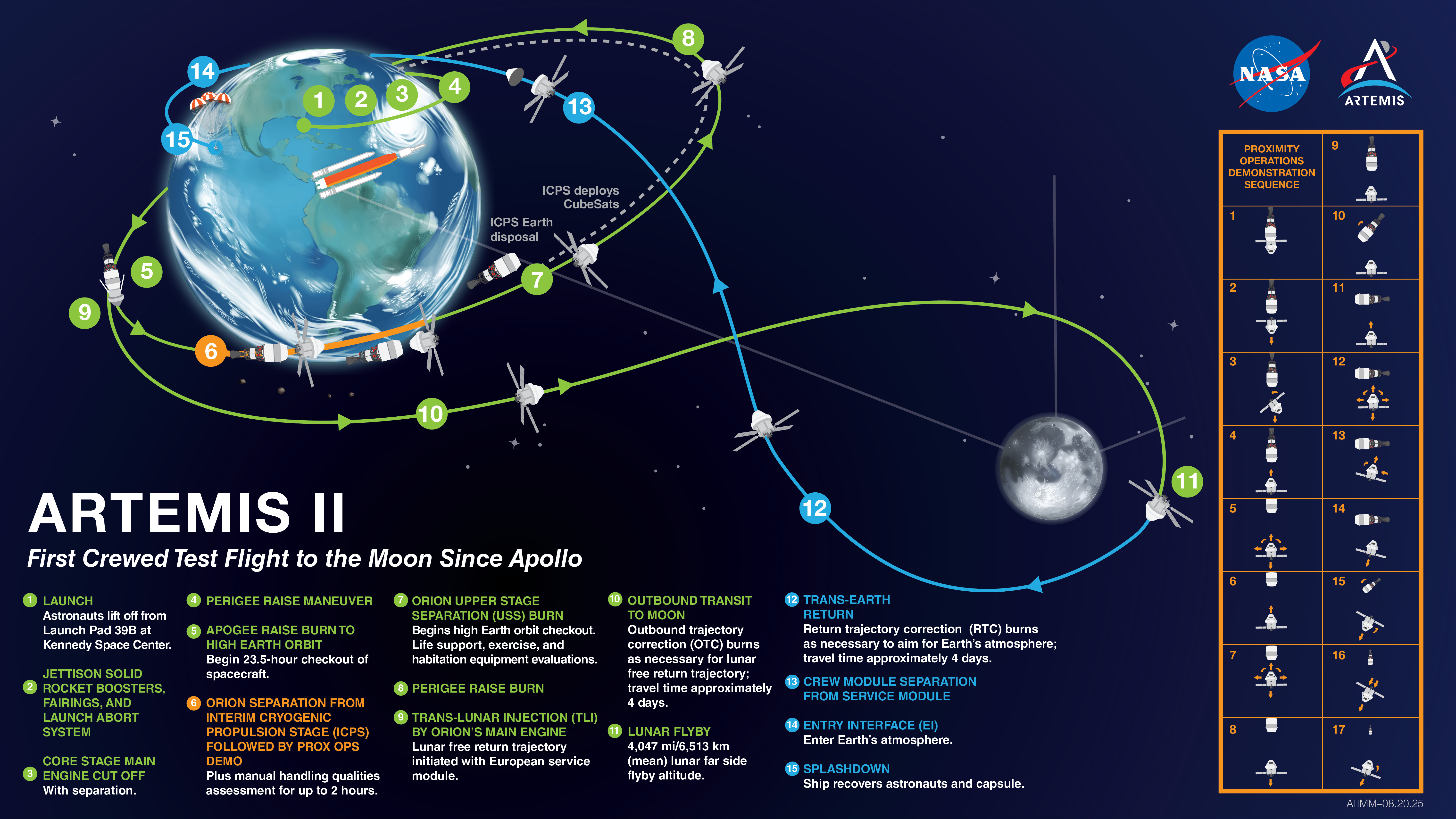
Artemis II will launch aboard the Space Launch System (SLS) rocket from Launch Complex 39B at Kennedy Space Center in Florida.
SLS generates approximately 8.8 million pounds of thrust at liftoff, surpassing the Saturn V rocket that powered the Apollo missions.
The rocket consists of:
- A core stage powered by four RS-25 engines
- Two solid rocket boosters providing most of the liftoff thrust
- An Interim Cryogenic Propulsion Stage (ICPS) that performs the translunar injection burn
Once in orbit, Orion separates from the upper stage and begins its journey toward the Moon.
Mission Timeline
Launch and Earth Orbit
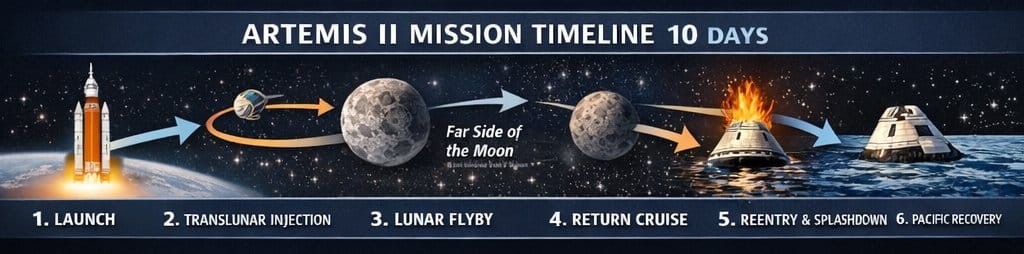
Following liftoff, the SLS rocket will carry Orion into Earth orbit during an approximately eight-minute ascent.
Once in orbit, the spacecraft will conduct initial checkouts before performing the translunar injection burn, sending the crew toward the Moon.
Translunar Cruise
The outbound journey to the Moon takes roughly four days.
During this time the crew will:
- Test life-support systems
- Evaluate navigation and communications
- Practice spacecraft operations
- Conduct photography and Earth observations
Orion’s service module—built by the European Space Agency—provides propulsion, electrical power, and thermal control during this phase.
Lunar Flyby
Rather than entering lunar orbit, Artemis II will follow a free-return trajectory.
This path takes Orion around the far side of the Moon before gravity naturally redirects the spacecraft toward Earth.
At its farthest point, the spacecraft will travel roughly 4,600 miles beyond the Moon, farther than any astronauts have traveled before.
The trajectory is designed as a safety feature. Even if the spacecraft lost propulsion capability, gravity alone would return the crew to Earth.
Return to Earth
After completing the lunar flyby, Orion will begin the return journey lasting approximately four days.
As the spacecraft approaches Earth, it will prepare for one of the most demanding phases of the mission: high-speed atmospheric reentry.
Reentry and Splashdown
Orion will enter Earth’s atmosphere at roughly 25,000 miles per hour.
To manage this extreme heating environment, Orion uses one of the largest ablative heat shields ever built for a crewed spacecraft.
The spacecraft will perform a skip-entry maneuver, briefly dipping into the atmosphere before skipping back out again to reduce speed and control the landing location.
The capsule will ultimately splash down in the Pacific Ocean, where U.S. Navy teams will recover the crew.
Orion Spacecraft Systems Being Tested
Because Artemis I flew without astronauts, Artemis II will be the first opportunity to validate Orion’s human-rated systems in deep space.
Key systems being tested include:
Environmental Control and Life Support
Orion must maintain a stable atmosphere, temperature, and humidity for astronauts during extended missions.
Navigation and Guidance
The spacecraft relies on star trackers, inertial measurement systems, and Earth-Moon navigation techniques.
Communications
Deep-space communications will be routed through NASA’s Deep Space Network, enabling continuous contact between the spacecraft and mission control.
Crew Operations
Astronauts will test manual spacecraft control and conduct operational evaluations to ensure Orion can be safely piloted if needed.
Preparing for Artemis III
The Artemis II mission is designed as the final major test before NASA attempts a crewed lunar landing.
That mission, Artemis III, will involve:
- Orion transporting astronauts to lunar orbit
- A Human Landing System (HLS) transporting astronauts to the surface
- Possible operations with the Gateway lunar space station in later missions
The Artemis program ultimately aims to establish a sustained human presence on the Moon while developing technologies needed for missions to Mars.
A New Era of Deep Space Exploration
When Artemis II launches, it will mark the first time humans travel beyond low Earth orbit in more than half a century.
For NASA and its international partners, the mission represents more than a return to the Moon—it signals the beginning of a new phase of exploration in which astronauts operate routinely in deep space.
If successful, Artemis II will open the door to lunar landings, space infrastructure around the Moon, and eventually human missions deeper into the solar system.
About The Author