
NASA’s Nuclear Mars Rocket May Be Built From Gateway’s Remains

Space Reactor 1 - Freedom
NASA’s evolving deep space strategy is coming into sharper focus following its March 24, 2026 Ignition briefing. Alongside the pause of the Lunar Gateway program and a renewed emphasis on lunar surface infrastructure, the agency is advancing a nuclear-powered Mars mission concept known as SR-1 Freedom—a signal that propulsion, not orbiting infrastructure, is now the critical path to Mars.
A Mission Built for Reach: SR-1 Freedom
The SR-1 Freedom concept represents a next-generation Mars mission architecture centered on nuclear propulsion and autonomous surface exploration.
The mission is expected to:
- Utilize a nuclear-powered propulsion system for interplanetary transit
- Deliver three helicopter-class aerial vehicles, dubbed Skyfall, building on the success of Ingenuity
- Extend exploration range beyond traditional rover limitations
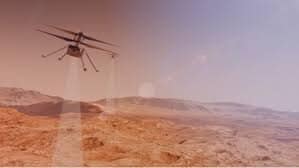
By deploying multiple aerial scouts, SR-1 Freedom shifts Mars exploration toward distributed, persistent reconnaissance, enabling access to terrain that has historically been unreachable.
Why Nuclear Propulsion Is Essential to Mars
Chemical propulsion has long defined Mars mission timelines, but it imposes hard constraints:
- Transit times of 6–9 months each way
- Increased astronaut exposure to radiation
- Limited launch window flexibility
Nuclear propulsion—now being actively developed by NASA in partnership with DARPA—offers a fundamentally different capability set.
Nuclear Thermal Propulsion (NTP)
- Uses a reactor to heat hydrogen propellant
- Produces high thrust with significantly improved efficiency over chemical systems
- Can reduce transit time, improving crew safety margins
Nuclear Electric Propulsion (NEP)
- Uses a reactor to generate electrical power for ion propulsion
- Enables long-duration, highly efficient cargo transport
- Supports scalable deep space logistics
Programs such as DRACO (Demonstration Rocket for Agile Cislunar Operations) are already moving these technologies toward flight readiness.
The implication is straightforward:
Mars mission viability improves dramatically when transit time, mass efficiency, and power availability are addressed simultaneously—and nuclear systems are currently the only approach that does all three.
The Gateway Pause and the Reallocation of Architecture
NASA’s decision to pause the Lunar Gateway “in its current form” is not occurring in isolation. It reflects a broader architectural shift away from orbital dependency and toward transport and surface capability.
Gateway’s Power and Propulsion Element (PPE), originally designed for long-duration operations in deep space, represents a significant investment in:
- Electric propulsion systems
- Power management and distribution
- Autonomous spacecraft operations
While not directly transferable to nuclear propulsion, these systems—and the engineering pathways behind them—are highly relevant to next-generation deep space vehicles.
The emerging pattern suggests:
- Orbital infrastructure is being deprioritized in the near term
- Surface systems (Moon base) and transport systems (nuclear propulsion) are being accelerated
- Existing investments are being absorbed into a more unified architecture
In this context, SR-1 Freedom is not a standalone mission—it is part of a restructured pipeline where propulsion becomes the enabling layer for both lunar and Martian operations.
🔭 Final Thought
If Gateway had launched as originally planned, it might have become a destination.
By pausing it, NASA may have unlocked something more consequential: a modular, evolvable architecture where prior investments are redirected toward what matters most—transport and capability.
From that shift, a new pathway emerges—one that could place a nuclear-powered spacecraft on a trajectory to Mars as early as 2028.
In that light, SR-1 Freedom is not just a mission concept. It is a signal that Artemis is evolving—less about building permanent waypoints, and more about enabling movement beyond them.
What was once intended to orbit the Moon may now help carry humanity to Mars.
About The Author


