NASA Ignition: Gateway Paused, $20B Moon Base Push, and New Lunar Incentives
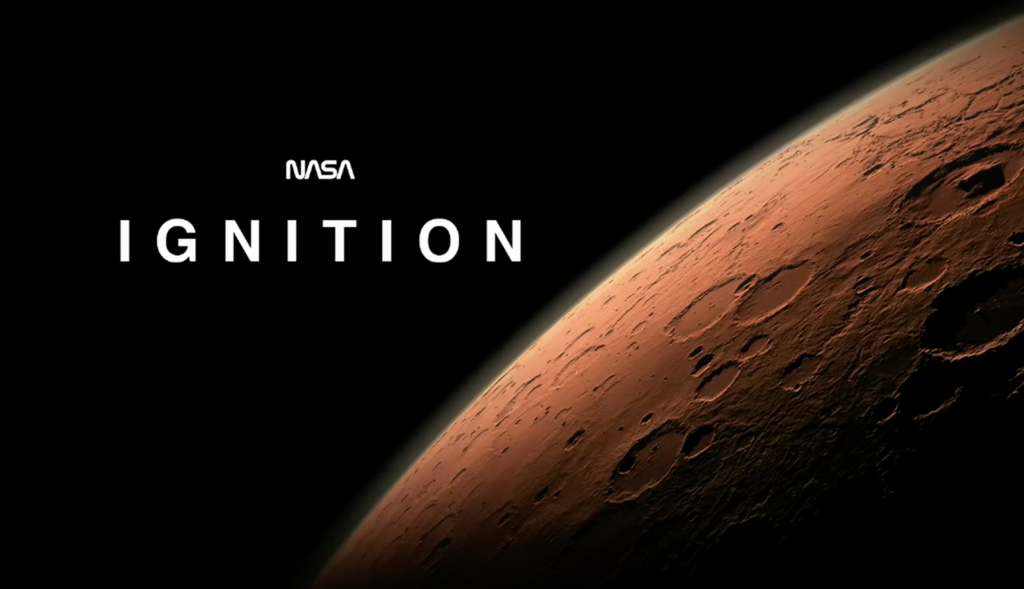
NASA Ignition Briefing — Gateway paused, Moon Base initiave, and nuclear propulsion to Mars
NASA Administrator Jared Isaacman announced a major strategic shift during the agency’s NASA Ignition briefing on March 24, 2026, signaling a decisive move toward accelerated lunar infrastructure and long-term human presence on the Moon.
The plan includes a proposed $20 billion lunar base initiative, a pause on the Gateway space station in its current form, and new commercial incentives aimed at solving one of the Moon’s most difficult engineering challenges.
Gateway was originally designed as a lunar-orbiting station to:
- Serve as a transfer hub between Orion and landers
- Provide deep-space habitation
- Enable international collaboration
But the new strategy reflects a key realization:
👉 Early and even sustained lunar missions can proceed without a fully built orbital station.
Instead, NASA plans to:
- Repurpose existing Gateway hardware where possible
- Reduce architectural dependencies that slow mission cadence
- Focus resources on infrastructure that directly enables lunar surface activity
This is less a cancellation than a reprioritization toward operational efficiency.

The centerpiece of the Ignition strategy is a three-phase plan to build a sustained Moon base—transitioning from exploration to habitation.
Phase 1: Build, Test, Learn
- Increased cadence of robotic and commercial missions (CLPS)
- Deployment of rovers, instruments, and tech demos
- Focus on mobility, communications, and early power systems
Phase 2: Establish Early Infrastructure
- Semi-permanent habitats
- Regular astronaut presence
- International contributions (e.g., pressurized rover systems)
Phase 3: Long-Duration Human Presence
- Heavy cargo delivery systems
- Continuous human habitation
- Full-scale surface infrastructure
This phased model emphasizes incremental capability building rather than one large, monolithic deployment.
🧭 Strategic Takeaway: NASA Is Optimizing for Speed and Sustainability
The Ignition briefing reveals a clear shift in philosophy:
| Previous Approach | New Direction |
|---|---|
| Build full architecture first | Build capability incrementally |
| Gateway as central hub | Surface systems as priority |
| Exploration missions | Sustained presence & infrastructure |
| Chemical propulsion baseline | Nuclear-enabled deep space |
NASA leadership emphasized urgency, noting that success will be measured in months, not years, amid growing global competition.
Jared Isaacman teased many new initiatives and funding opportunities, such as RFIs and contracts for surface operations on the Moon.
🌑 CLPS Incentive: “Survive the Night” Challenge
As part of its evolving Commercial Lunar Payload Services (CLPS) strategy, NASA is introducing a targeted incentive to accelerate innovation where it matters most—lunar night survival. Contractors can now earn a performance bonus for successfully demonstrating “survive the night” capabilities, specifically by deploying a radioisotope-powered device that continues operating through the roughly 14-day lunar night and transmits signals back to Earth afterward.
This is a big deal. Surviving the lunar night has long been one of the hardest engineering challenges due to extreme cold (~−173°C) and lack of solar power. By tying financial rewards directly to demonstrated performance, NASA is pushing industry to solve a critical bottleneck for sustained lunar operations—effectively crowd-sourcing one of the key technologies needed for a permanent Moon base. (Commercial Lunar Payloads Delivery CS-8 Task Order 1.0 Contract)
About The Author